Diesel in Harbor Water Is Not an Accident!
Information Sheet
Diesel in harbor water is not an accident.
Some long-established habits are unfortunately still widespread, such as trying to fix small incidents where a little diesel, gasoline, or fuel mixture spills next to the boat into the lake and is “neutralized” with a few drops of dishwashing liquid. According to general knowledge and regulations, this is incorrect.
If only a few drops - about ½ a shot glass (1–5 ml) - of diesel or gasoline are involved, it will usually disperse relatively quickly through evaporation. As the quantity increases, the likelihood of environmental contamination also increases. However, in that case, two offenses may occur: negligent water pollution due to diesel and intentional pollution due to dishwashing liquid. A targeted squirt of dish soap may be considered the illegal introduction of environmentally harmful substances and can result in a fine. This also applies to the well-known squirt after bilge water discharge.
Dish soap combined with diesel is counterproductive. While the surface film may disappear (which diesel would naturally do after a few days through evaporation), it remains in the water as emulsified droplets beneath the surface. In this bound form, the negative ecological impact is significantly greater than without dish soap on the water.
When refueling a recreational boat, there are generally no problems. Keyword: “fuel hose with backflow control.”This is one of the cleanest methods, even when transferring fuel from a 20-liter canister.
An example of an intelligent filling system is one that prevents overfilling thanks to an automatic shut-off mechanism.
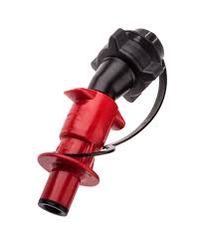
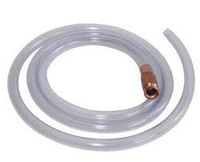
Extra care is required with outboard motors, as they usually use a two-stroke fuel mixture. Diesel is a light oil and floats on water. While it may not look attractive, it does relatively little harm to nature in small amounts because it evaporates quickly. If only a few drops spill, there is no need to immediately imagine birds with oil-covered feathers.
In case of larger spills, however, the fuel must be professionally removed - for example, by the fire department.